
Design Automation for Structural Brackets: Explore, Validate & Reuse

Engineering teams designing hundreds of structural brackets per year face the same bottleneck: too much time rebuilding models, too little time exploring better designs. Discover how Cognitive Design enables teams to explore wider design spaces at the concept stage and scale a validated methodology across an entire bracket family, without starting over for every variant.

Gregorio Carasi
Gregorio Carasi
Product Manager
CDS
Henri De Charnace
Henri De Charnace
R&D Director
CDS
March 10, 2026
@
1:30 pm
45
Days
12
Hours
44
Mins
29
Secs
Sign up today!

Description

In this webinar, we address a recurring bottleneck faced by engineering teams in Aerospace, Automotive, Defense, and other industrial manufacturing that design hundreds of structural brackets per year: engineers spend most of their time on manual model generation, leaving little room to explore designs and push performance boundaries. When a geometry changes, the process starts over from scratch.

Drawing from a recent customer project, we show how Cognitive Design enabled teams to explore a wider design space at the concept stage, compare candidates across synthesis methods, manufacturing routes, performance, cost and carbon footprint, and reuse the validated workflow across an entire bracket family.

We will also share our latest advances in AI for engineering, including how autonomous design workflows combining AI-driven orchestration with deterministic physics solvers are beginning to close the gap between what engineers can envision and what their tools can execute.
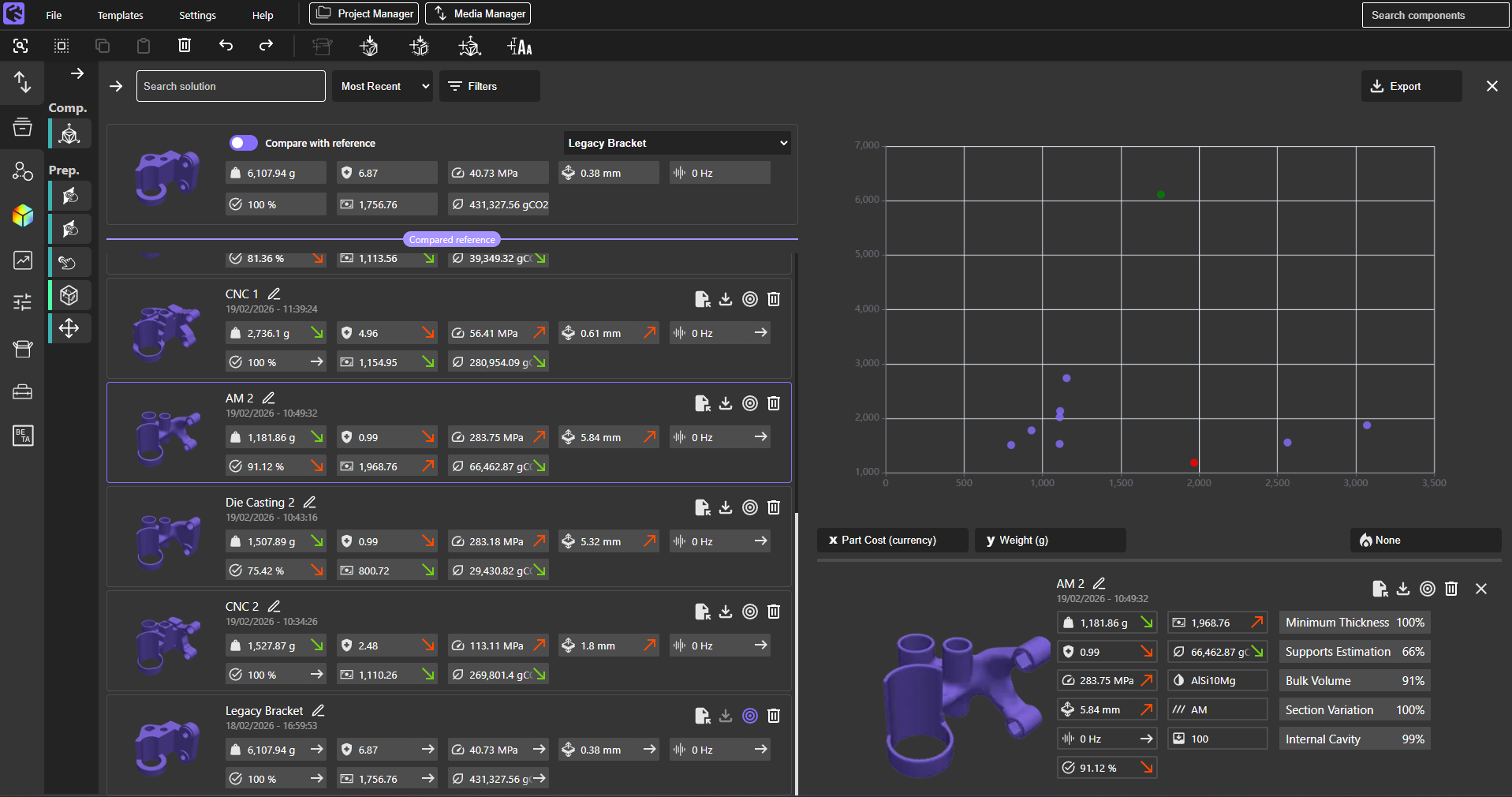
 

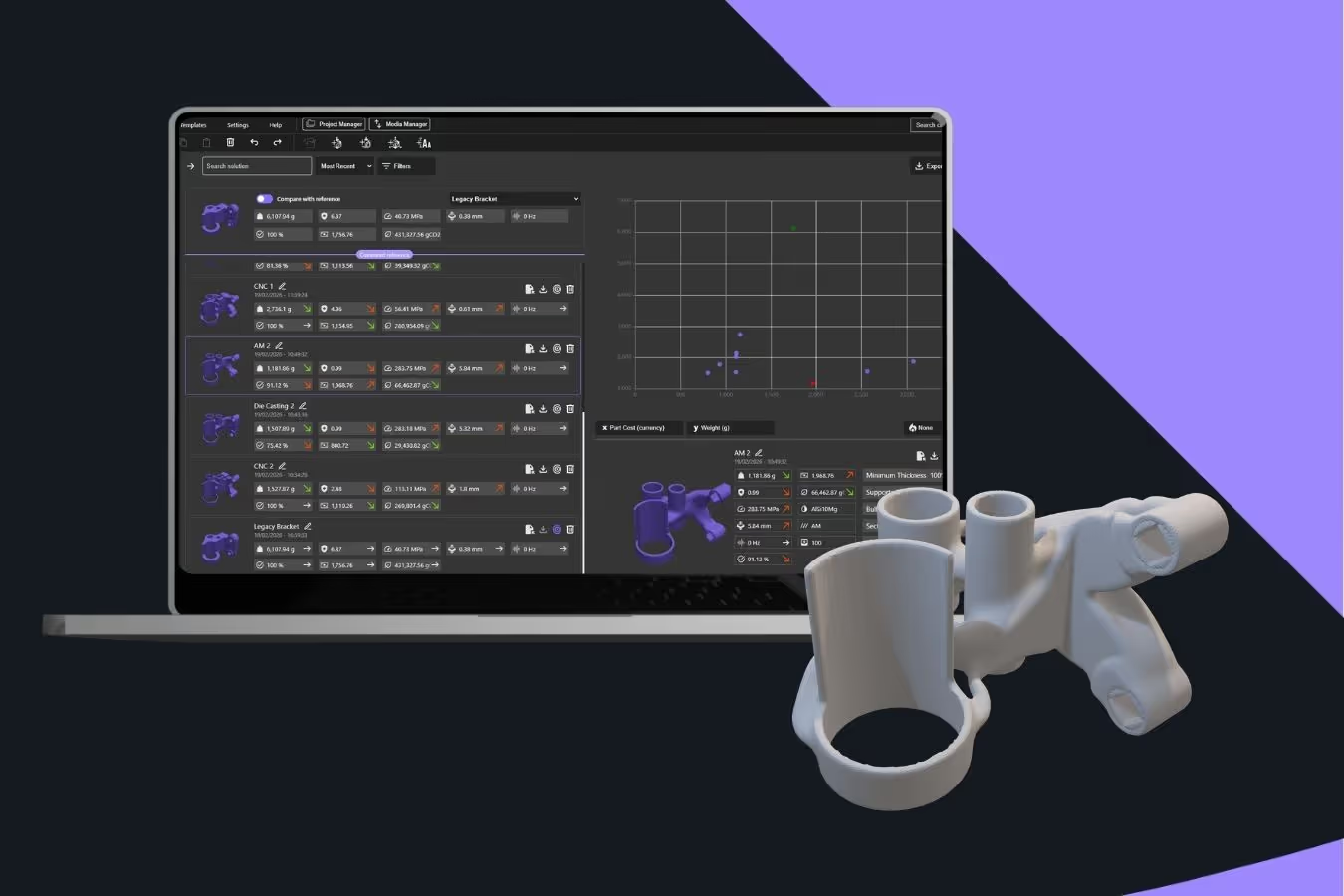
Preview of the Design Explorer (Concept Exploration Phase)

Outcomes

  • 80% Engineering Lead Time saved to explore and refine each variant (from weeks to hours)
  • 15+ design alternatives explored and analyzed (Performance, Manufacturing process, Cost, Carbon Footprint) per bracket variant
  • Up to 40% weight saving per manufacturable variant

What you will learn

How to replace manual, variant-by-variant concept design with a structured, data-driven methodology built to scale across an entire component family.


Key takeaways

  • Exploring and selecting best design candidates across multiple synthesis methods and manufacturing routes
  • Building reusable, scalable workflows to address the diversity and volume of brackets
  • Reducing mass and improving structural performance through AI-driven generative design from the earliest concept stage


Who should attend

  • Mechanical engineers working on component families with recurring geometry variations.
  • R&D teams in aerospace, space, defense, and automotive sectors exploring how generative design and AI can reduce development cycles.
  • Engineering managers looking to standardize and accelerate their concept development process
Gregorio Carasi
Gregorio Carasi
Product Manager
CDS
Henri De Charnace
Henri De Charnace
R&D Director
CDS
Nicolas Bellomo

Thanks to Cognitive Design, we were able to rapidly design and validate a structurally optimized tank that fits within our CubeSat constraints, integrates all required functions, and meets demanding pressure requirements. It’s a game-changer for enabling component design exploration high-performance propulsion in small satellite platforms.

Nicolas Bellomo
CTO

Unlock Your Design Potential

Request a demo to see how Cognitive Design by CDS can revolutionize your engineering workflow